Described as the most meaningful work of their collegiate career, students in Dr. Patti Coffey’s psychology capstone course, Issues in Prisoner Reentry, spent the semester partnering with community organizations to explore the complexities of incarceration and reentry. One cohort of nine students collaborated with The Voices of Power, a Madison-based organization led by mentors Frank Davis and Aaron Hicks, whose lived carceral experience informs their advocacy for systemic change.
Supported by a Community University Partnership Award, the project had two goals: 1) create mentored experiences for Grow Academy, a low-security residential youth center which is part of the Wisconsin Department of Corrections’ network of juvenile facilities and 2) build capacity within Voices of Power to support at-risk youth, develop scalable models for community transformation, and partner with university educators and researchers to strengthen these efforts.
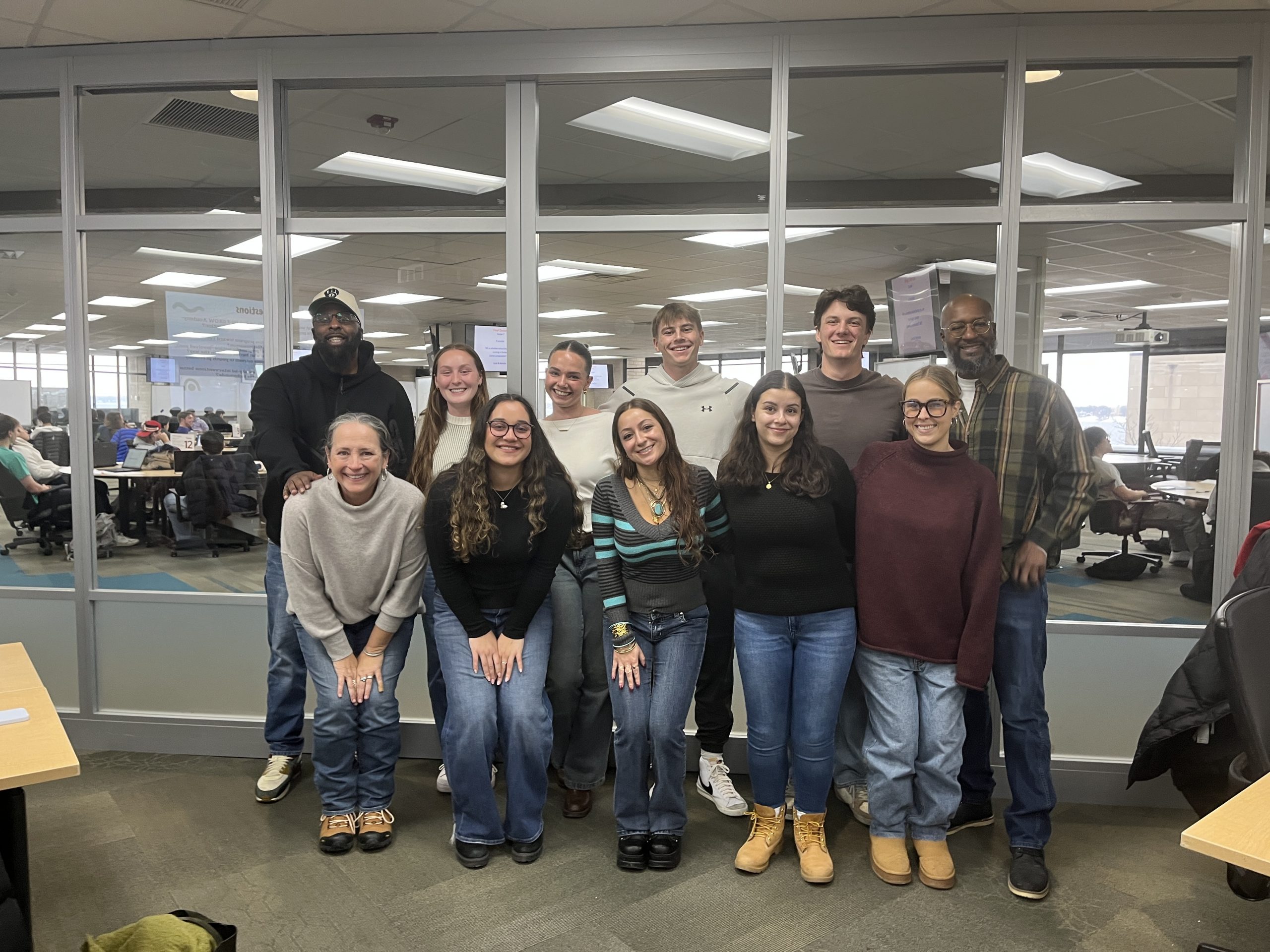
Students visited Grow Academy, met staff, toured the facility, and held extended conversations with justice-involved youth. Guided by Frank and Aaron, students learned to approach their conversations with the youth at Grow Academy with openness rather than rigid research protocols.
“We questioned how we approach research,” said senior Kylie VanStraten, a psychology and legal studies major. “There are rules around bias, impartiality, not having a connection with the participant … and we questioned that. Why is that the right way? Are you really going to get the correct, most accurate information by staying so separated? They’re not lab rats to poke and prod. They’re people.”
Through these conversations and additional research on youth reentry, mentorship, and mental health, students discovered that exposure to new experiences and peer mentorship significantly reduce stress, promote identity development, and enhance trust. To put these insights into action, students organized a campus visit for Grow Academy youth—helping them envision opportunities beyond incarceration.
“This partnership allows the kids at Grow to see possibilities beyond their immediate circumstances,” says Frank Davis. “It also gives UW students a clearer picture of the system they may someday influence. No textbook can do what a face-to-face conversation can—especially when many of these students could go their entire lives without substantial contact with people who’ve been system-impacted.”
UW students were able to engage deeply with questions of stigma, identity, and connection, thanks to the insight and guidance they received from Frank and Aaron. “Our class is three hours long, but I was locked in the whole time,” says Kylie. “I could listen to them for hours—they’re so inspiring.”
Patti agrees. “Frank and Aaron bring invaluable lived experience to both the classroom and the broader community. What truly distinguishes them, however, is the depth of their authentic engagement with students. Their commitment embodies the spirit of the Wisconsin Idea and serves as a model for meaningful community-based partnerships.”
Because the grant funds supporting this collaboration expire at the end of the semester, Patti is actively exploring ways to support the community partners who have been integral to our students’ learning experiences.