In April 2025, Psychology and Legal Studies major Kaydence Hughes began work as a research assistant with the Incarceration and Mental Health Lab, transcribing interviews with incarcerated students to be used for qualitative coding on a higher-education project.
Her interest in understanding and addressing the ways legal and correctional systems affect people’s lives continued to grow. In the fall, she joined a local law firm as an intern and stayed on as a paralegal in the spring. That experience deepened her interest in constitutional law, particularly around Eighth Amendment violations and the rights of incarcerated individuals.
Given her interests, she enrolled in Dr. Patti Coffey’s Psychology 626: Issues in Prisoner Reentry in spring 2026. When Dr. Coffey outlined the course’s required community engagement options, Kaydence drew on her prior work transcribing interviews with incarcerated people, an experience that inspired her to choose tutoring at Oakhill Correctional Institute.
Kaydence’s participation at Oakhill is part of the larger Prison Education Initiative, a UW–Madison program that provides incarcerated Wisconsin students with access to college-level coursework and academic support.
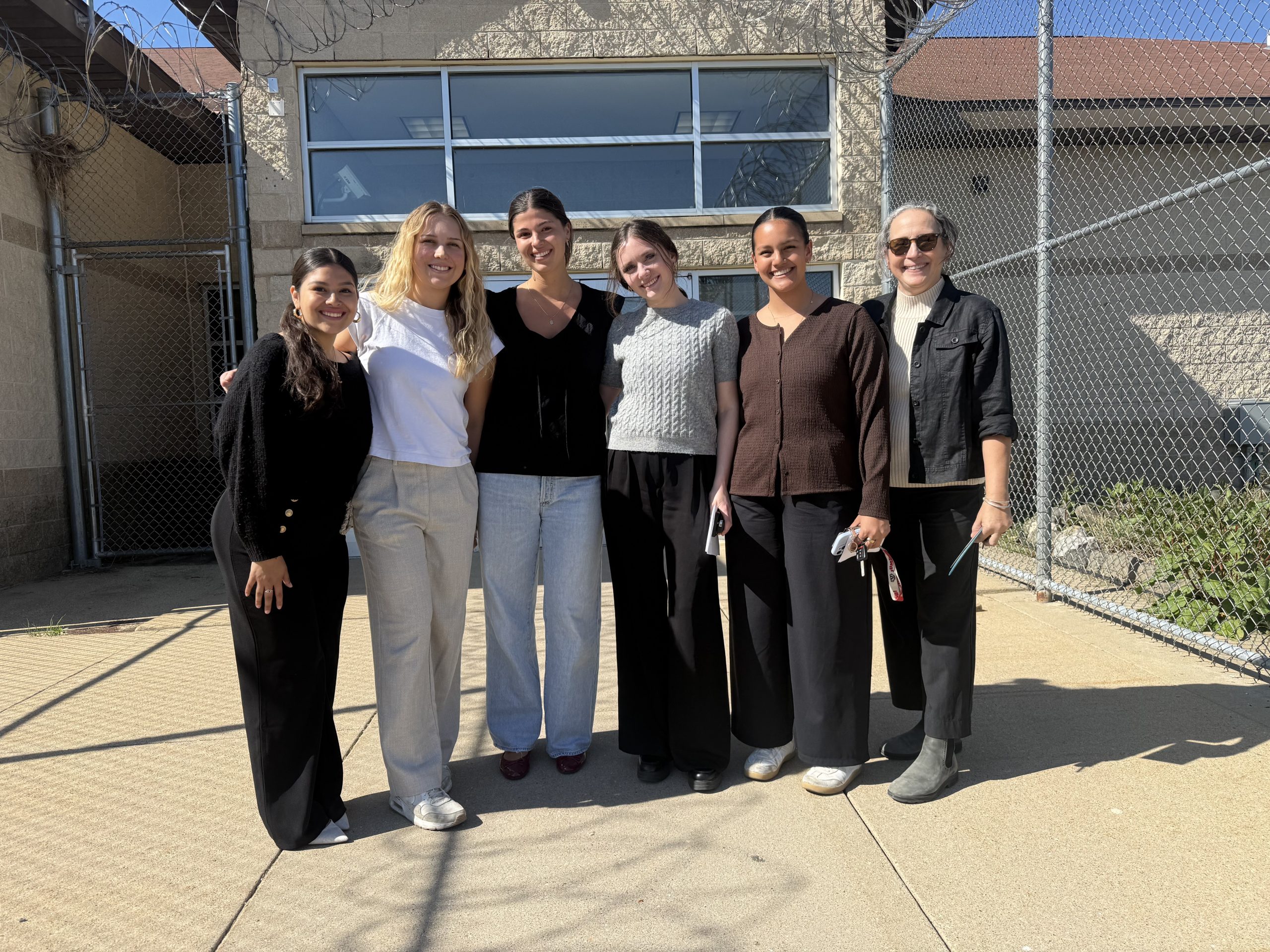
Beginning in February, Kaydence and her classmates drove to Oakhill each Wednesday evening for 90-minute tutoring sessions, reviewing course content and working closely with the Intro to Psychology students there. “Working on Intro Psych serves as a refresher for graduating Psychology majors and as a valuable study opportunity for Oakhill students, many of whom are highly motivated to learn psychology and apply it to their own lives,” says Coffey.
Kaydence describes the work as one of the most meaningful experiences of her college career. “Each week, I had the opportunity to work alongside people who brought astounding intelligence, humor, effort, and persistence into the classroom,” she says. “I came into this experience hoping to support students in their education, but I left having learned just as much from them. Their commitment to growth, despite the obstacles, is something I know I will carry with me. I am very grateful for the mentors, students, and colleagues who have allowed me to learn from these experiences.”
In May, Kaydence was invited to speak at the end-of-semester ceremony, where she commended the students for their courage in choosing growth and demonstrating resilience.
“Overall, this experience taught me that people are so much more than their past mistakes. A college education allows incarcerated individuals to develop a sense of purpose and an identity as a student, in an environment where they are often defined only by their incarceration and past. It helps give them a reason to be hopeful for their future outside of prison. Given that most incarcerated individuals will eventually return to their communities, I think this kind of rehabilitative work is incredibly important, not only for the individuals involved but also for the communities they will return to.”