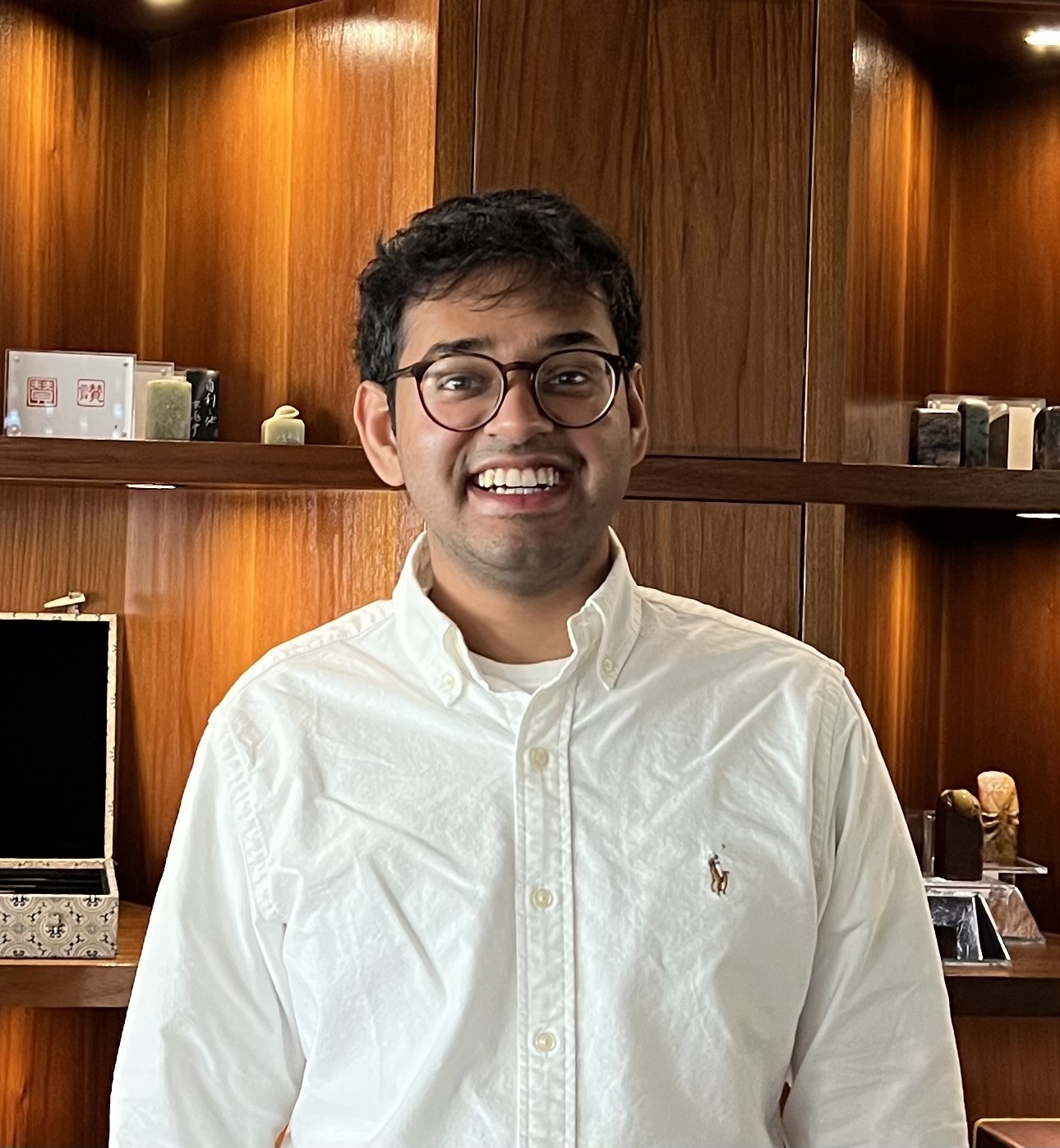
 Siddharth Suresh is a PhD student in the Department of Psychology. His research interests lie in the confluence of cognitive science and machine learning. Learn more about his research in the Knowledge and Concepts Lab and his recommendations for a perfect day in Madison.
Please describe your research in a way an elementary school student might understand.
When I say ‘cat,’ your brain lights up with a bunch of stuff: furry, has claws, says meow, knocks things off tables. All of that together is like a little ‘cat file’ in your head. AI has its own version of these files, too. I study whether the cat file in your mind and the cat file in an AI look the same.
I do this for two reasons. First, if I build an AI that thinks about cats the same way you do, that helps me check if scientists’ ideas about how your brain works are actually right. Second, the really big AI systems people use today, like ChatGPT, sometimes think about the world kind of like we do, and sometimes really differently. I try to figure out why, and whether we can make them understand the world more like we do.
What inspired you to pursue that research?
I started out as a computer scientist. I loved AI, but during a summer research experience before my senior year, I got to work in a lab that was using insights from the brain to build better AI models of vision. That’s when it clicked for me: the same tools I loved could be used to study something even more interesting, how the mind works. And the reverse was true too: understanding the mind could help us build better AI.
I realized that to do this well, I needed to actually understand the mind. That’s what brought me to Madison, where I initially worked on visual perception. Over time, I got more interested in representations that cut across vision and language, not just one or the other. Studying how we represent knowledge about the world felt like the natural next step, and I’ve been working on exactly that in the Knowledge and Concepts Lab with Tim Rogers.
What are your hobbies outside of school?
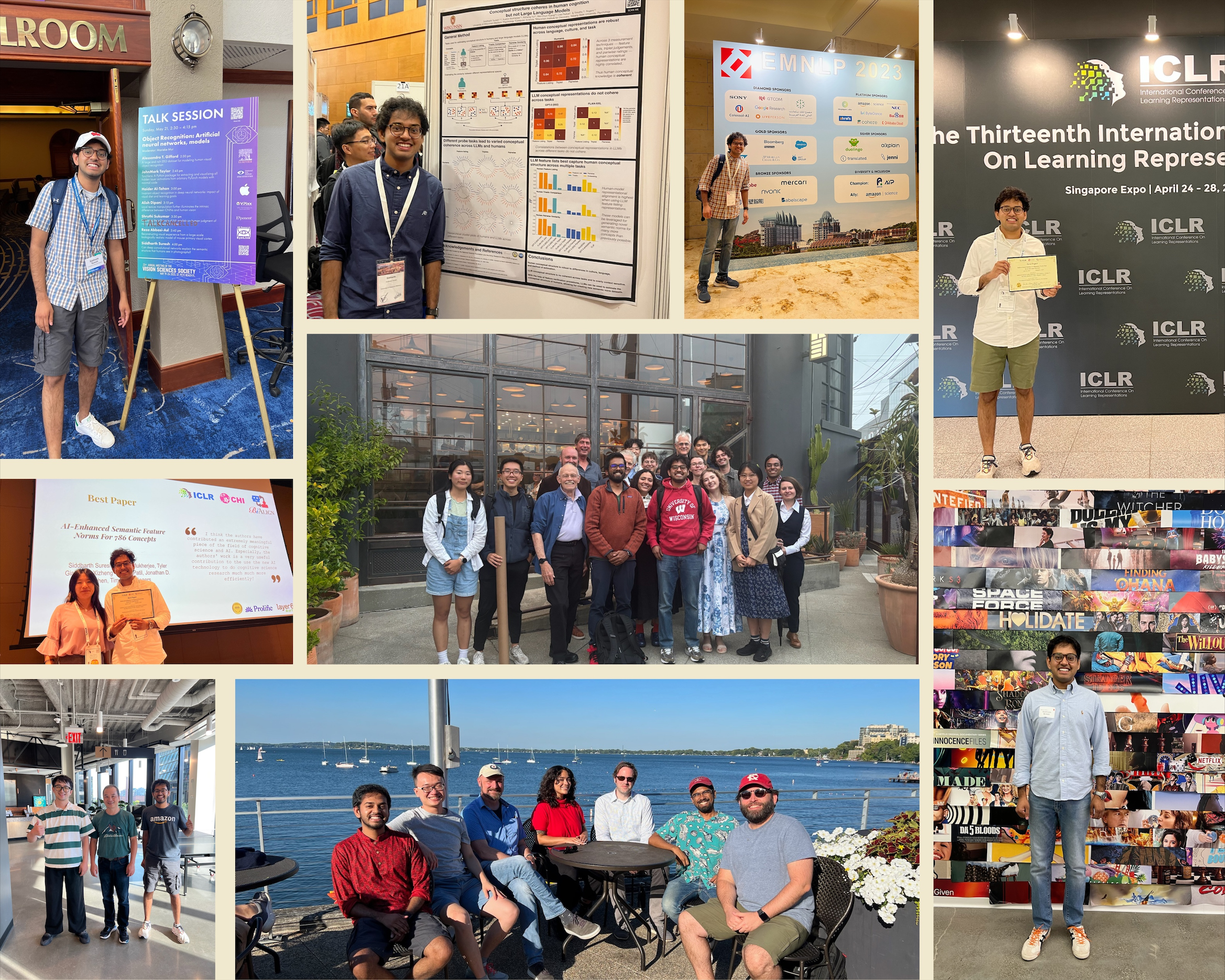
I play guitar and sing at home, play poker with friends, and I’m always up for a game of pickleball or table tennis. I sail on Lake Mendota when the weather is right. I also love trying vegetarian food around Madison and going on long walks around the city.
What are your favorite places or things to do in Madison?
Mornings: The farmers market on the square, a pastry from Batch Bakehouse with coffee at Cafe Domestique, or a coffee and crepe at Bradbury’s.
Afternoons: Walking on the frozen lake in winter, the lakeshore path, a stroll through the Arboretum or the botanical garden, or a lap around the zoo. Pickleball at Nick or Brittingham park when it’s warm.
Evenings: Walking around the square and State Street, cheese curds and a Spotted Cow at the Terrace, catching a sunset from the Terrace or James Madison Park. For going out, Robin Room and Public Parking. And a burger and cheese curds at Jordan’s Big 10 is always a good call.
What’s a positive experience from graduate school that will stay with you?
The biggest thing I’m taking away is confidence. I came in wanting to study interesting problems, and I’m leaving knowing I can come up with good questions and that I have the tools to answer them. That’s a shift that happened gradually, but it’s the thing I value most.
A lot of that comes from working with Tim. I’d walk into our meetings with a half-formed idea and walk out more enthusiastic and more clear-headed than before. His creative thinking and the way he communicates complex ideas clearly set a standard for what good mentorship looks like.
I’ll also miss the camaraderie in the lab. We genuinely made each other’s work better, whether it was critiquing a talk, tearing apart a poster draft, or pressure-testing an idea before it went anywhere. That culture of honest, helpful feedback shaped how I think about collaboration.
Congratulations, you’ve earned your PhD! How will you celebrate and what would you love to do next?
I’ll be starting as a researcher at Amazon AGI SF Labs in San Francisco in September, working on building computer-use agents that are useful and more human-aligned. Between my defense and then, I’m planning to travel, get some rest, get back into weight training, pick up some side projects that got put on the back burner during the PhD, and become better at Mandarin.